A 36B robot foundation model,
controlling a real arm on Jetson Thor
Perceptron's Isaac 0.5 (SO-100/101 fine-tune) runs fully on an NVIDIA Jetson AGX Thor, with no cloud GPU. It drives a real SO-101 arm through a smooth 30 Hz asynchronous control loop and a web dashboard with live cameras and a Launch button.
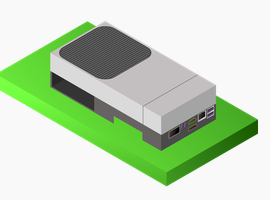
NVIDIA Jetson AGX Thor
Blackwell GPU (sm_110), 122 GB unified memory, JetPack R38.1 / CUDA 13. The full 36B model runs on the device in BF16 (71.7 GB), next to the arm, with no cloud GPU or network link to a server.
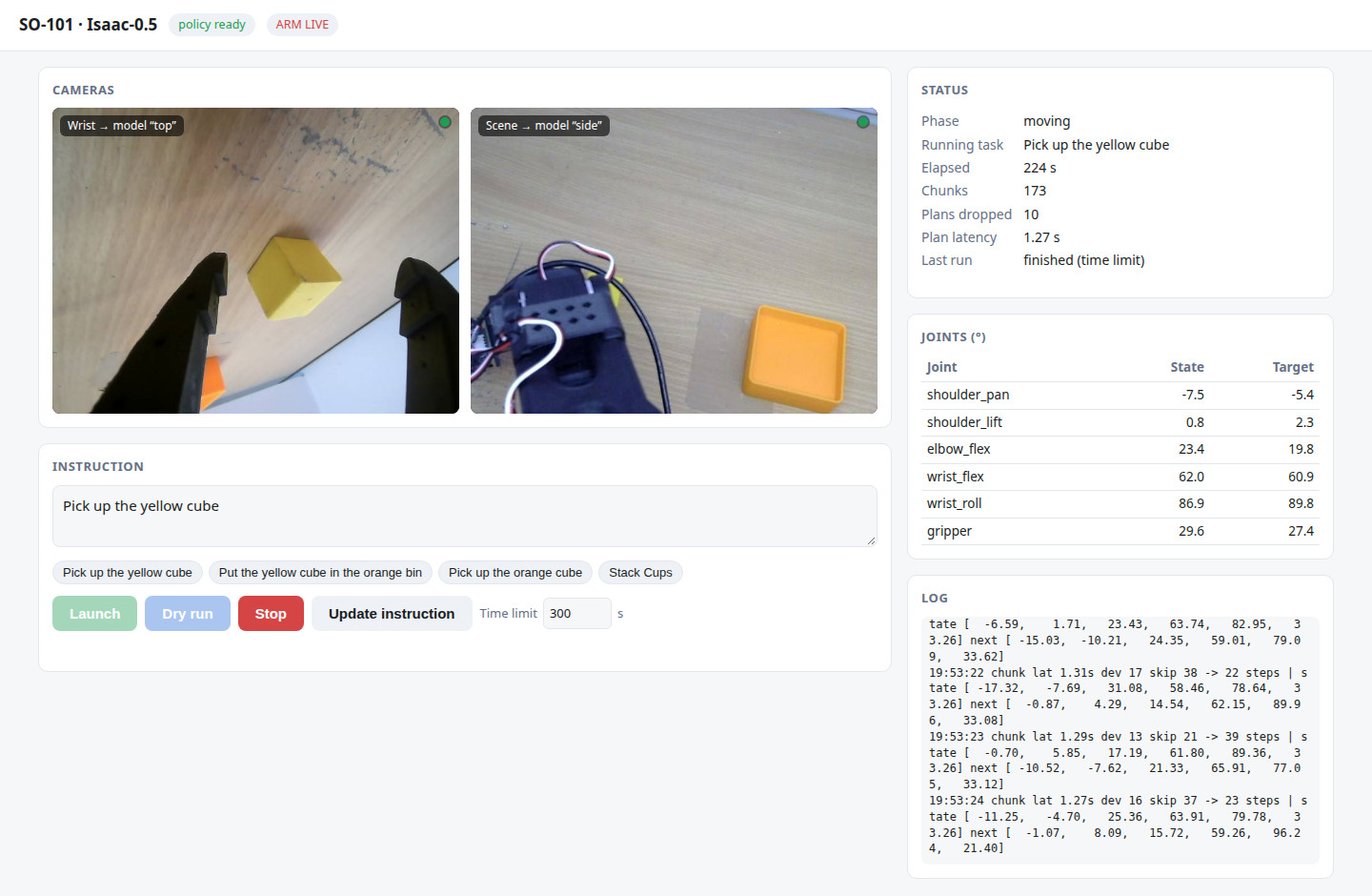
Dashboard
One page to operate the robot: live camera streams, an instruction box with presets, and Launch, Dry run, Stop and Update instruction buttons. It also shows run status, joint state vs target, and the controller log. The model stays loaded, so Launch starts in about a second. The arm is connected only during a run, and every exit path turns torque off.
What it took to run on Thor
aarch64 + CUDA 13
The release pins x86 torch 2.10.0+cu128 through [tool.uv.sources]. Installing with
--no-sources and the cu130 index gives native sm_110 builds. mharmony, the prompt
tokenizer, is built from source with Rust.
H100-only ABI gate
Inference refuses to run on anything except torch 2.10.0+cu128 on an H100. The kernels only need BF16
grouped_mm on SM80+, so the check is replaced at runtime. The installed package is not modified.
Joint frame
The checkpoint uses the dataset's joint frame, which differs from current LeRobot degrees:
q_model = sign·q + offset, with sign [1,−1,1,1,1,1] and offset [0,90,90,0,0,0]. Checked on
hardware: the first predicted action matches the measured state within about 4°.
Episode clock
The policy's prompt includes an episode timestamp, but its internal clock advances only 1/30 s per call. With
about 1.3 s between calls, every chunk looked like the start of an episode. The fix passes the real elapsed time as
anchor_timestamp_seconds, the same anchor the paper's serving contract describes.
Smooth asynchronous control
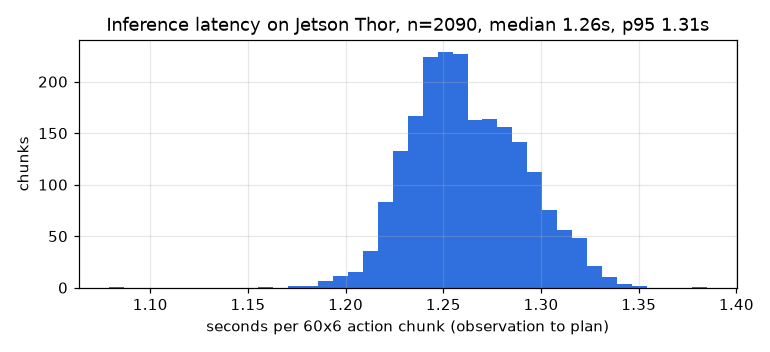
camera + joints ──► [inference thread]  Isaac 0.5 (~1.26 s) ──► 60×6 action chunk
                         ▲ newest observation                           │
                         │                                              ▼
 30 Hz loop: skip steps already elapsed → commit rule → 10-step crossfade
             → adaptive rate (≥0.5×) → EMA 0.3 → 8°/tick cap → send_action
| Stage | Why |
|---|---|
| Skip elapsed steps | The chunk was planned from an observation ~1.3 s old; the steps for time that has already passed are dropped. |
| Commit rule | At rest the model alternates between "stay folded" and "reach out". A new chunk whose first 20 steps average more than 30° from where the current plan ends, on any joint, is dropped (at most 2 in a row). This removed the back-and-forth swinging. |
| Crossfade + adaptive rate | A 10-step blend into each new chunk. Playback slows down to 0.5× so a plan lasts until the next one arrives, and the arm never stops between chunks. |
| EMA + step cap | Removes chunk-to-chunk jitter and limits any joint to 8° per tick. |
Results so far
top, left) and the scene camera (model side, right).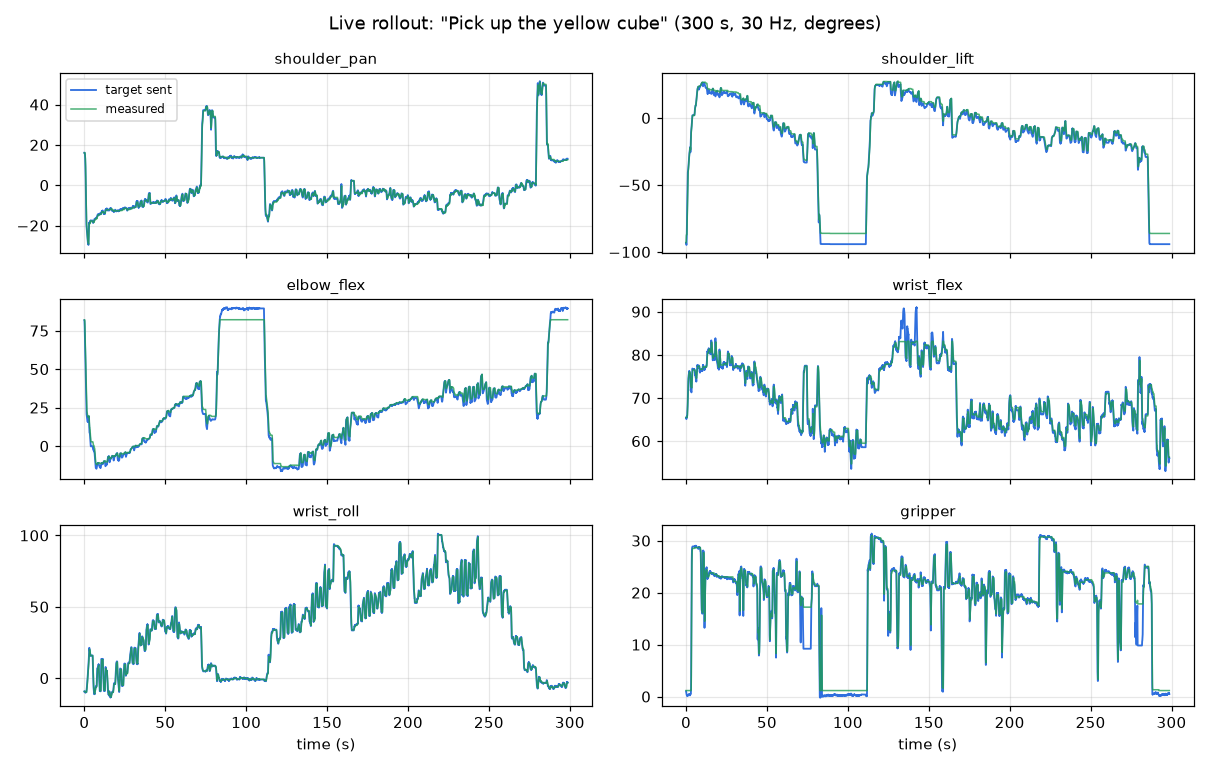
A 300 s live run: the commanded target (blue) and measured joint state (green) overlap almost everywhere. The gaps are at joint limits, where the arm can't reach the commanded angle.
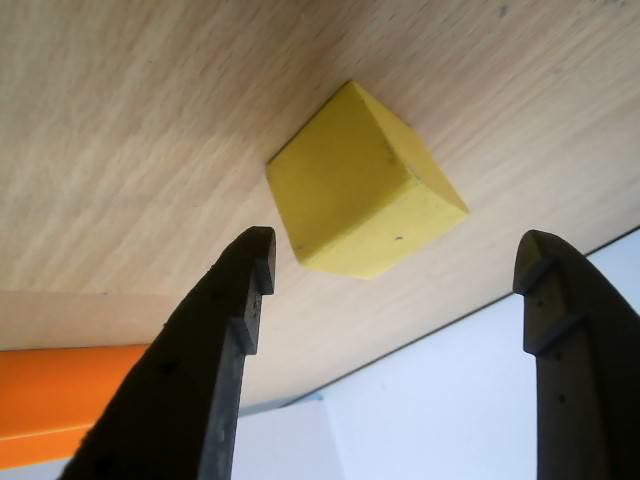
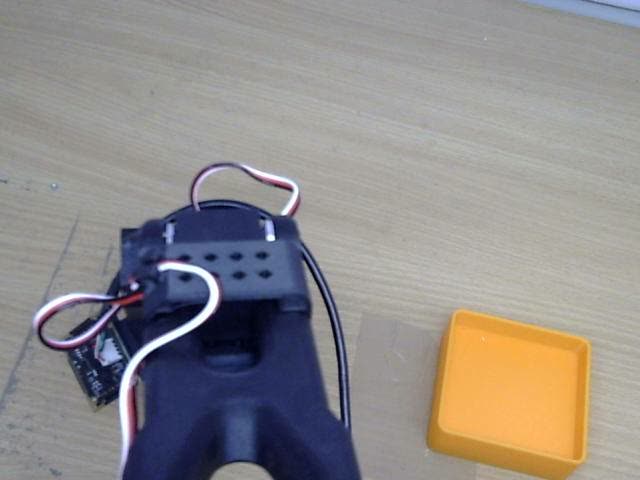
Status: zero-shot, with no fine-tuning on this arm or scene. The video at the top shows a full pick-and-place: grasp, transfer to the bin, release and return home. Other runs only hovered over the cube without closing the gripper, so this is not yet consistent. The biggest known gap is the scene camera: in training it sits across the table facing the arm, while here it is overhead. Fine-tuning is not feasible on Thor; Perceptron's SO-100/101 fine-tune used 32 GPUs.
About Isaac 0.5
Isaac 0.5 (Perceptron, 2026) is an open-weight embodied foundation model. It handles video perception, embodied reasoning and robot control in one 36B sparse backbone:
- language, grounding and FAST action tokens come straight from the backbone;
- continuous actions come from a Flow-matching DiT expert that cross-attends to the backbone's states;
- null-expert routing lets each token use 0 to 8 of the model's 256 routed experts, about 2.5B active per token.
Training co-trains on up to one million hours of action-free video plus egocentric, UMI and robot data. Scaling the video cut the teleoperation hours needed to reach a fixed offline action-loss target by about 210×. Perceptron reports a 97.2% LIBERO average after LIBERO-specific fine-tuning. The release covers 35+ embodiments, including SO-100/SO-101. The checkpoint used here was fine-tuned on the MolmoAct2 SO-100/101 demonstrations.
Get started
git clone https://github.com/kabilankb/isaac05-so101-thor.git ~/Isaac0.5_so101
cd ~/Isaac0.5_so101
./install_thor.sh                 # uv + Rust, isaac @ bf368cb, cu130 torch, 143 GB weights
source .venv/bin/activate
lerobot-calibrate --robot.type=so101_follower --robot.port=/dev/ttyACM0 --robot.id=so101_follower_thor
./selftest_guarded.sh             # no-robot self-test
python dashboard.py               # open http://<thor-ip>:8790
Or with Docker Compose (arm64)
A 5.8 GB arm64 image with the same tested packages. The weights and calibration are mounted.
It's based on ubuntu:24.04: nvidia/cuda images ship a desktop-GPU libcuda that fails on Thor with CUDA error 803.
cp .env.example .env              # weights, calibration, arm + camera paths
docker compose build              # ~7 min on Thor
docker compose up -d              # dashboard on :8790, ready in ~3.5 min
docker compose run --rm cli run --dry-run --task "Pick up the yellow cube"   # stop the dashboard first
| Hardware | Used here |
|---|---|
| Compute | Jetson AGX Thor, JetPack R38.1, CUDA 13, 122 GB unified memory |
| Arm | SO-101 follower (Feetech STS3215) |
Wrist camera → top | Sonix USB2.0 camera, 640×480 MJPG |
Scene camera → side | Logitech C270, 640×480 MJPG |